

Imagine you’re baking a cake for a special occasion. You open the oven, expecting a beautifully risen dessert, but instead, you’re greeted with disappointment—a flat, dense cake that didn’t rise. Clearly, there’s a problem.
Your mind goes into diagnostic mode: "Where did I go wrong?" You start running through the usual suspects. Did you add too much liquid? "Nope, I measured it precisely." Did you forget the baking powder? "Nope, I added exactly what the recipe called for." Did you overmix the batter? "No, I mixed it just right." You open your pantry and rifle through everything until you find the baking powder box. Then you see it…
You accidentally used an old box of baking powder. Expired baking powder was the culprit. While you might feel terrible, you’ve successfully diagnosed the problem. The symptom—a cake that didn’t rise—was caused by a 'blind spot': expired baking powder. But should this be the end of your exploration, or does it warrant a deeper dive into the problem space?
At The Moment , we study deeper-level problems and challenges that are connected to the initial diagnosis. For instance, “using expired baking powder” could be classified as a level-1 problem, directly leading to observable symptoms. But what caused you to use expired baking powder in the first place? Was it a lack of awareness? A misprinted expiration date? A cluttered pantry that led you to mistake an old box for a new one? Or perhaps a faded label? Maybe it was a mix of several factors.
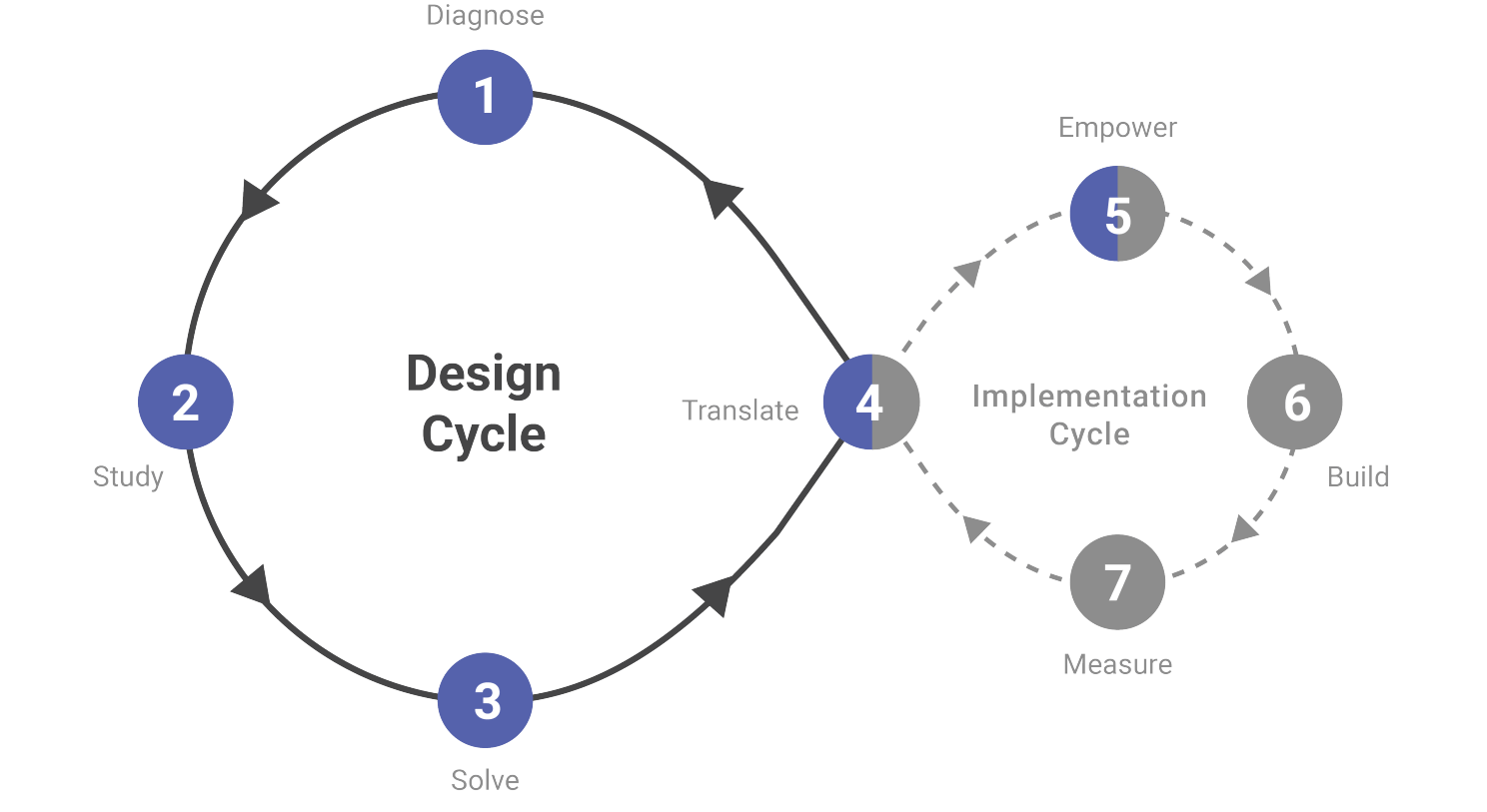
The insight to impact lifecycle used @The Moment
The Purpose of Diagnosis
In the Insight to Impact (I2I) framework, diagnosis is about rapidly identifying the root cause of an issue. Just as you quickly identified the expired baking powder, a diagnostic approach offers a high-level understanding of what’s wrong. It pinpoints where the problem lies and provides initial hypotheses on how to resolve it; using fresh baking powder. However, diagnosis alone often only scratches the surface. It doesn’t provide a complete understanding of what led to the problem or how to prevent it from happening again.
The Purpose of Study
This is where the study phase comes in. A study digs deeper into the contributing factors and surrounding challenges identified during diagnosis. In the baking scenario, studying the problem further could reveal multiple interconnected issues—perhaps your pantry is poorly organized, or expiration dates are hard to read. The study phase involves detailed exploration, testing assumptions, and gathering evidence to clarify how different issues interact and contribute to the observed symptom.
Key Differences Between Diagnosis and Study
- Scope and Depth: Diagnosis provides a broad, initial overview of the issue, while the study delves deeply into specifics.
- Speed and Detail: Diagnosis is a quick scan or test to identify potential root causes. Study is a slower, in-depth analysis that gathers more data.
- Outcome Orientation: Diagnosis offers hypotheses and potential directions; study validates or refines these insights with evidence.
Consider how addressing the expired baking powder alone won’t prevent future baking mishaps. Studying your pantry habits, labeling practices, and ingredient usage offers a more robust, lasting solution.
Why This Distinction Matters
Understanding the difference between diagnosing and studying is crucial for organizations and individuals tackling complex problems. Diagnosis helps identify where to start, while study ensures a thorough understanding, guiding data-driven, sustainable solutions. This layered approach—moving from diagnosis to study—allows for a more complete, nuanced resolution of issues.
Moving Forward
Diagnosing a problem is an essential first step, but studying it brings true clarity. By exploring both phases, we can address surface-level symptoms and dig deeper into root causes, creating impactful, lasting change. Next time you face a challenge, ask yourself: have you merely identified the issue, or have you truly understood it?

Jordan Julien
Jordan (he/him) is passionate about making products better for people, especially those who are often overlooked or underserved. He believes great design should be accessible, inclusive, and built with real people in mind.