

Have you ever tried to assemble a piece of furniture with instructions that seemed to be in another language? You’re staring at the parts, the diagrams don’t quite make sense, and frustration starts to set in. That’s what it’s like when teams receive data or insights in a language they don’t understand.
Everyone has the pieces, but without a clear guide, things just don’t fit together. In the business world, translating insights into actionable steps is what bridges the gap between knowing something and doing something about it. It’s how we turn insight into real impact—ensuring that everyone, no matter their “instruction manual,” is on the same page.
""A good translation captures the spirit of the original text, while making it understandable to a new audience."
In our work at The Moment, we regularly encounter the challenge of “translation.” When insights are uncovered, they often need to be translated into language, tools, or frameworks that make sense to the teams responsible for acting on them. This translation isn’t just a simple transfer of information; it’s a process of reshaping insights into actionable steps that resonate with different audiences.
In our work at The Moment, we regularly encounter the challenge of “translation.” When insights are uncovered, they often need to be translated into language, tools, or frameworks that make sense to the teams responsible for acting on them. This translation isn’t just a simple transfer of information; it’s a process of reshaping insights into actionable steps that resonate with different audiences.
Translation: The Bridge Between Design and Implementation
In the I2I framework, translation serves a dual purpose. The first flow is from solution to empowerment. Here, the insights conveyed by our solutions are carefully translated into clear, actionable guidance for the teams responsible for building them. This process ensures that everyone understands not only what needs to be done but also why it’s important, empowering teams to confidently take the next steps and iterate upon the existing solution. It’s like handing over a roadmap that enables them to move forward independently. This creates an iterative flywheel, allowing the team to measure the system’s efficacy, translate it into understandable feedback, and empower themselves to build the next iteration—continuously improving the system.
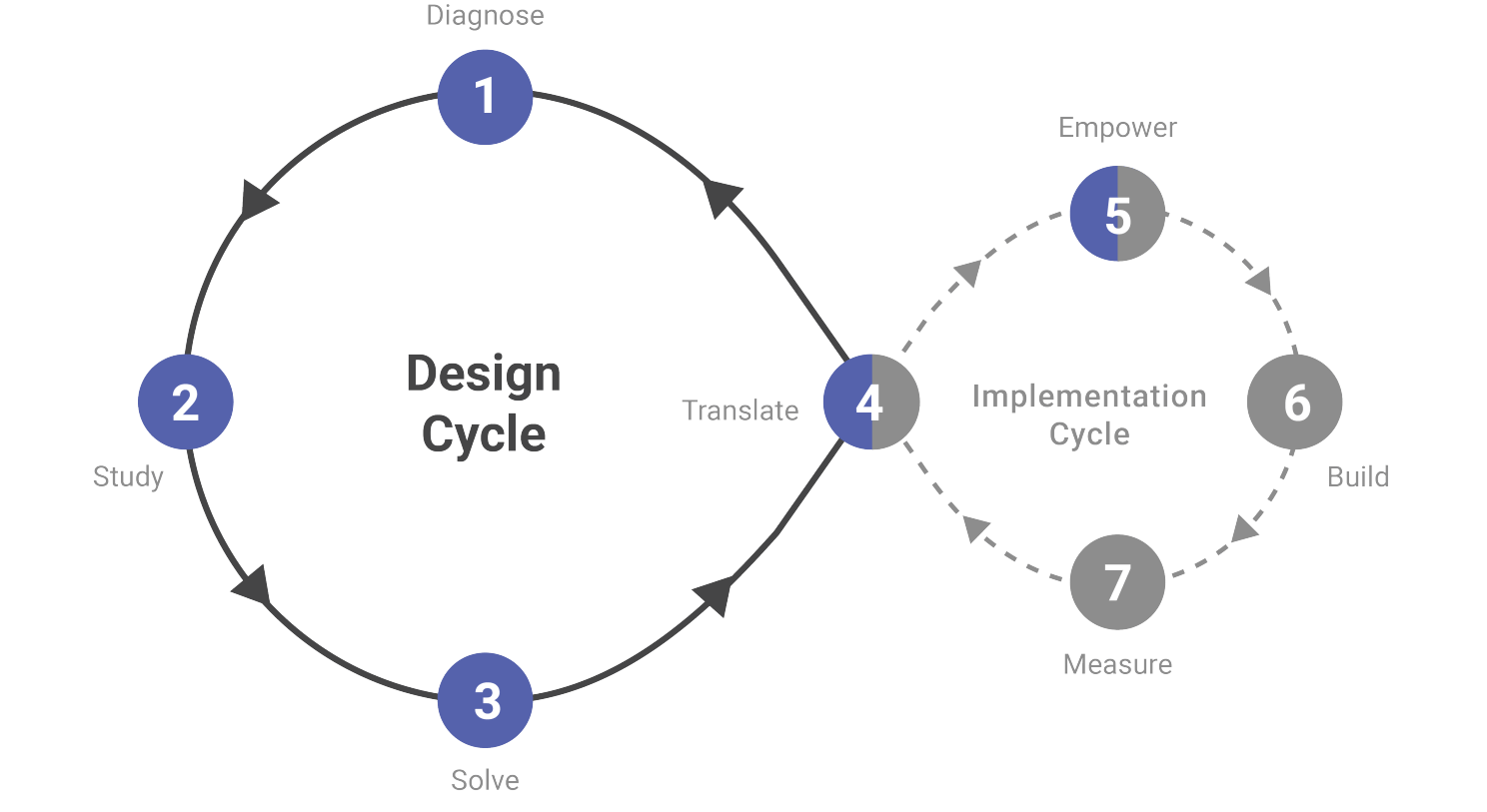
The Insight to Impact Lifecycle
However, sometimes the data or feedback gathered during implementation reveals deeper complexities or challenges that require further diagnosis. In these cases, the measured data and insight need to be translated into clearly articulated challenges, problems, or gaps between user needs and the current solution. This sets the stage for a new design cycle, beginning with a fresh diagnosis of the evolving problem space.
Why Translation Matters for Sustainable Impact
Without this nuanced approach to translation, organizations risk either stagnation or missteps. They may push forward with a solution that doesn’t quite fit, or they may abandon valuable insight because they weren’t properly understood. In a world where speed and agility are prized, the ability to translate insights accurately and effectively across teams becomes a strategic advantage.
In the Insight to Impact Lifecycle, translation bridges the gap between insight and impact, ensuring that every team, regardless of their background or expertise, understands exactly what they need to do next. Whether the outcome is an empowered team building a new iteration or a fresh design cycle that begins with diagnosing a new challenge, this dual flow enables organizations to adapt, iterate, and drive sustainable growth.
The Bottom Line
Translating insight isn’t just about communicating findings; it’s about creating shared understanding and actionable clarity. By bridging the gap between knowing and doing, translation empowers organizations to make informed decisions, respond to new challenges, and build solutions that truly work. In the end, effective translation is the key to turning insight into real, lasting impact.

Jordan Julien
Jordan (he/him) is passionate about making products better for people, especially those who are often overlooked or underserved. He believes great design should be accessible, inclusive, and built with real people in mind.