

I’ve been in too many rooms where speed is mistaken for strategy. Teams scramble to deliver projects faster, executives demand Agile transformations, and somewhere in the chaos, we celebrate movement over meaning. The problem? Without a clear North Star—a clearly articulated direction—none of it adds up to real progress.
I’ve seen this firsthand. A few years ago, I worked with an organization that prided itself on being ‘fast-moving.’ They launched projects at breakneck speed, pivoted constantly, and celebrated their ability to adapt. But when we zoomed out, we saw a pattern: projects were abandoned mid-flight, teams felt disconnected from the broader mission, and despite all the activity, measurable progress was elusive. They weren’t actually getting anywhere.
Speed Without Strategy is Just Chaos
In today’s business world, ‘move fast’ has become gospel. But moving fast in the wrong direction is just wasted energy. Organizations fall into this trap because they confuse responsiveness with intentionality. They assume that if they just keep moving, they’ll eventually land somewhere good. But progress isn’t just about movement—it’s about movement in the right direction.
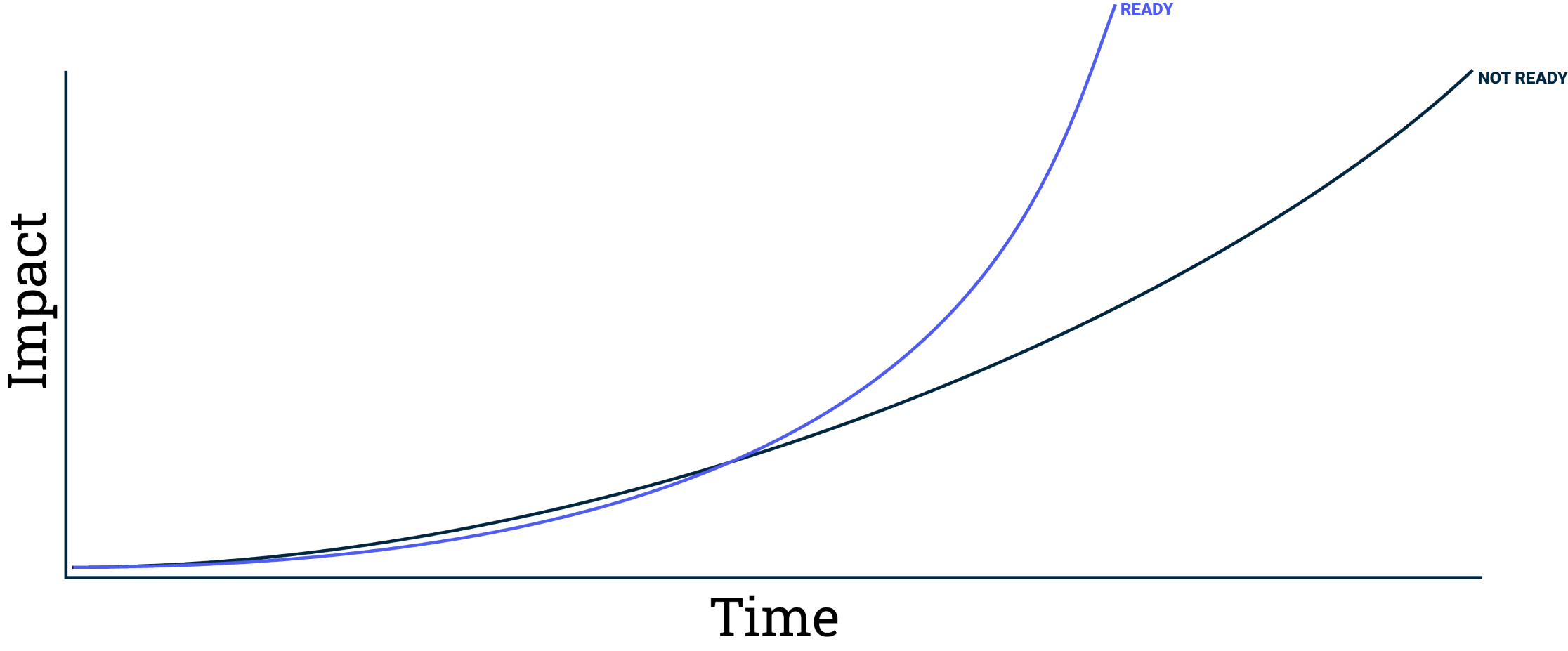
A North Star provides that direction. It’s not just a mission statement or a vague aspiration—it’s a well-defined vision of where you’re going and a framework for making decisions that matter. Without it, companies burn through resources, employees feel lost, and innovation efforts become scattered experiments rather than meaningful shifts.
How to Know If You’re Caught in the Illusion of Progress
Here are some red flags I’ve seen in organizations stuck in this cycle:
- Success is measured by speed, not impact. You hear phrases like, “We delivered this in record time!”—but no one talks about whether it actually solved a problem.
- Teams work in silos, constantly ‘optimizing’ without a shared goal. Everyone is busy, but their work isn’t compounding into something meaningful.
- Projects start strong but lose momentum or change direction constantly. There’s an endless stream of ‘priorities,’ but few things reach a successful, measurable outcome.
If any of this sounds familiar, you’re not alone. Many companies operate this way—not because they want to, but because they lack a framework to align their energy toward meaningful change.
North Star Thinking: A Different Way Forward
The term North Star Metric was originally introduced by Sean Ellis in the context of growth hacking, highlighting a single metric that drives long-term company success. This inspired us to integrate the broader concept of a North Star into our thinking—not just as a metric, but as a guiding framework for making strategic decisions that align teams and create sustained impact.
So, how do you break free from the illusion of progress? It starts with clarity. A North Star gives your organization a clear destination, ensuring that all movement is intentional. Here’s what that looks like:
- Prototype your North Star. Instead of just words, create a tangible artifact—whether it’s a concept map, future-state blueprint, or interactive prototype—that visualizes how your strategy translates into real-world impact.
- Align teams around it. Facilitate collaborative sessions where teams co-create and refine the North Star Prototype to ensure shared ownership and clarity.
- Test and evolve. Continuously revisit and validate your North Star prototype based on real-world feedback, ensuring it remains relevant and actionable..
When organizations take this approach, everything changes. Teams feel more connected, decisions become easier, and progress becomes something you can actually see—not just something you chase.
Final Thought
Speed has its place. But without direction, it’s just movement for the sake of movement. If we want to build something lasting—something that truly makes an impact—we need more than just agility. We need alignment. We need a North Star.

Jordan Julien
Jordan (he/him) is passionate about making products better for people, especially those who are often overlooked or underserved. He believes great design should be accessible, inclusive, and built with real people in mind.